
Local strength, European scale
Walkro operates from several sites in the Netherlands, Belgium and Germany. From these sites, we work every day to process raw materials, support our customers and make our supply chain even more sustainable. Close to where it all happens, with a focus on people and the environment.
Walkro Belgium
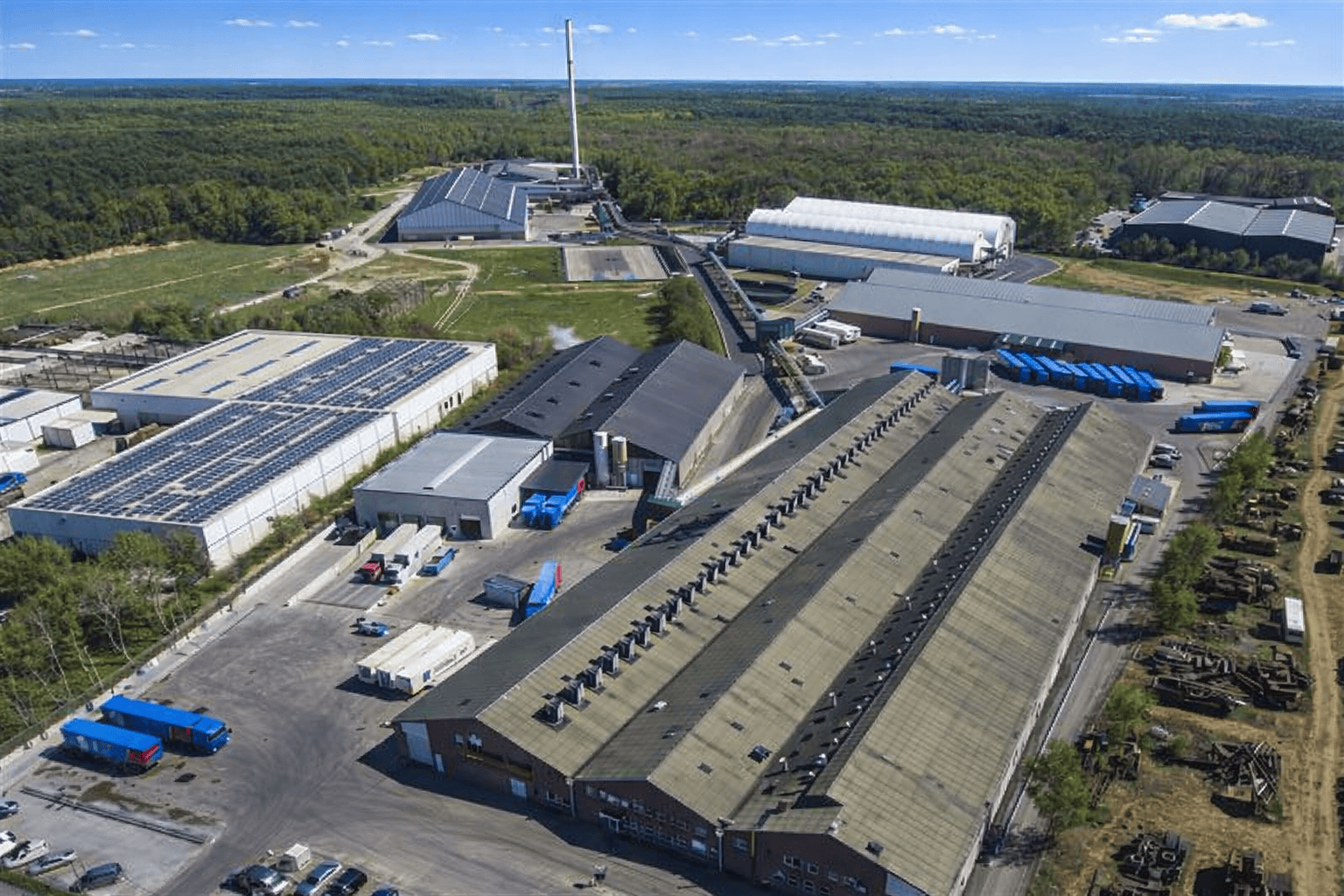
This company forms the origins of Walkro and was founded in 1990 in Maasmechelen by Mr van der Kroon and the three Walraven brothers. The company, and with it production, was launched in the first half of 1991.
Originally, the company began as a phase 2/3 tunnel facility with a capacity of 400 tonnes of matured compost per week. Phase 1 compost has also been produced here since 1993. This is Walkro’s only site in Belgium where phase 1 substrate is also produced. The other Belgian Walkro production site is also supplied with phase 1 compost from Maasmechelen. Currently, 3,600 tonnes of phase 3 compost are produced weekly in Maasmechelen. Part of this is packed into bales that are shipped all over the world; 50 employees carry out the weekly production of Phases 1 to 3. Due to increasingly stringent environmental regulations in Belgium, substantial investments have been made here to carry out Phase 1 composting entirely on-site.
All of Walkro Belgium’s operational activities are managed from Maasmechelen.

Walkro Netherlands
Walkro Netherlands comprises several sites, including Blitterswijck, Meterik, Horst and Grubbenvorst.
The company was founded in 1963 by brothers Piet and Jan Theeuwen and became part of Walkro in 2000. In the 1990s, major investments were made to enclose the entire process in line with the requirements regarding odour and ammonia emissions. Blitterswijck currently has various water and acid scrubbers, a biobed and a chimney. These installations help to ensure that production can take place in harmony with the surrounding environment. Blitterswijck is also home to Walkro’s central laboratory, where more than 600 samples from all sites are analysed each week. Weekly production currently stands at 5,000 tonnes of mature compost. In Blitterswijck, 95 motivated employees are responsible for the production of growing medium.
Walkro Germany
The first growing bed facility was completed in 1999, and growing beds have been filled ever since. Operations began at that time with the supply of mature compost from the parent company in Blitterswijck. The growing beds are delivered to the customer once the bud formation phase is complete. The advantage of this way of working is that the grower only has to concern themselves with harvesting the mushrooms and selling them. This does not necessarily have to take place in ultra-modern grow houses, as Pizlhof takes care of the most critical phase. Thanks to the low investment required in buildings, the cost price for the grower can be kept at a very attractive level.
During 2002, this part of the business reached full capacity and work began on further expansion, which was completed in the course of 2003.
Following the completion of the tray-based operation in 1999, work began on the construction of the tunnel complex with the aim of being able to use the company’s own matured compost from 2000 onwards. In August 2000, this phase was completed and, instead of mature compost, fresh compost was brought in from Blitterswijck. Opportunities for further expansion in the sale of mature compost were also sought and found.
Following the completion of the tunnel facility, construction of the composting plant began in the winter of 2000/2001. The first fresh compost was produced in May of that year. This included the entire raw materials process, whereby a number of basic products are still sourced from the Netherlands to ensure the greatest possible reliability. Further expansion of operations is possible thanks to the excellent quality of the compost and bins, which has enabled the company to build an excellent reputation in a short space of time. Market opportunities are plentiful due to the location and the expansion of the European Union.
